
Are you trying to serve mainland Europe from your country, but battling with customs red tape, and slow transit times? Things are just taking too long to get to the customer …
For growing brands, expanding into Europe is one of the ultimate milestones. But treating the continent as one single market is a quick way to burn through your capital.
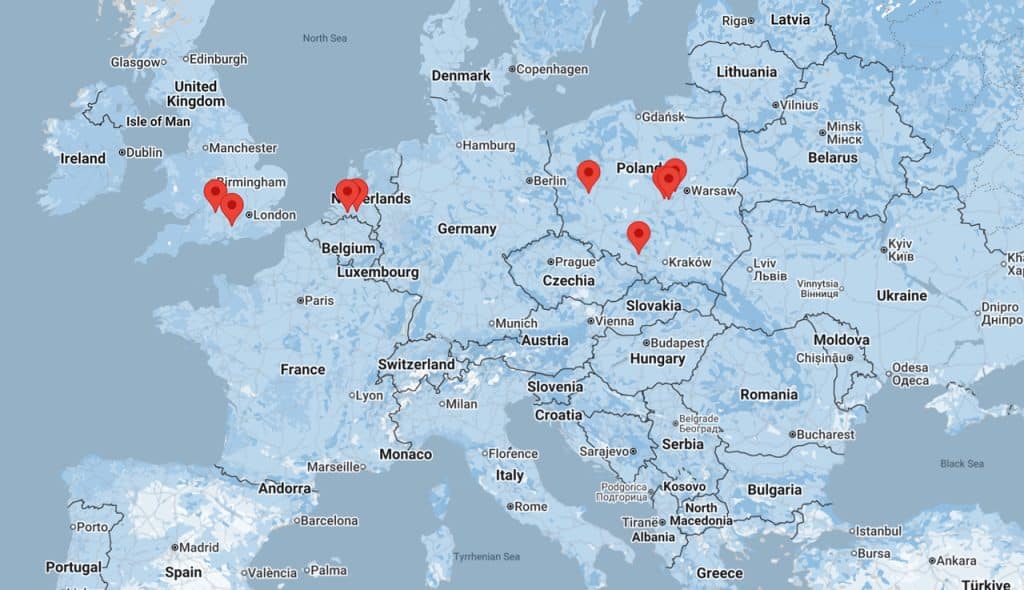
To win in Europe, you need a smart, dual-hub strategy. Our Director, Ken Aitken, suggests: “you enter Europe through a 3PL in the Netherlands and pair it with a 3PL in Poland to get easy access to mainland Europe.”
Let’s look at how to architect your European expansion:
- An overview of 3PL logistics in the Netherlands
- Where are strategic locations for warehouses in the Netherlands?
- Why you also need Poland
- How to choose the best European 3PL for your brand
An overview of 3PL logistics in the Netherlands
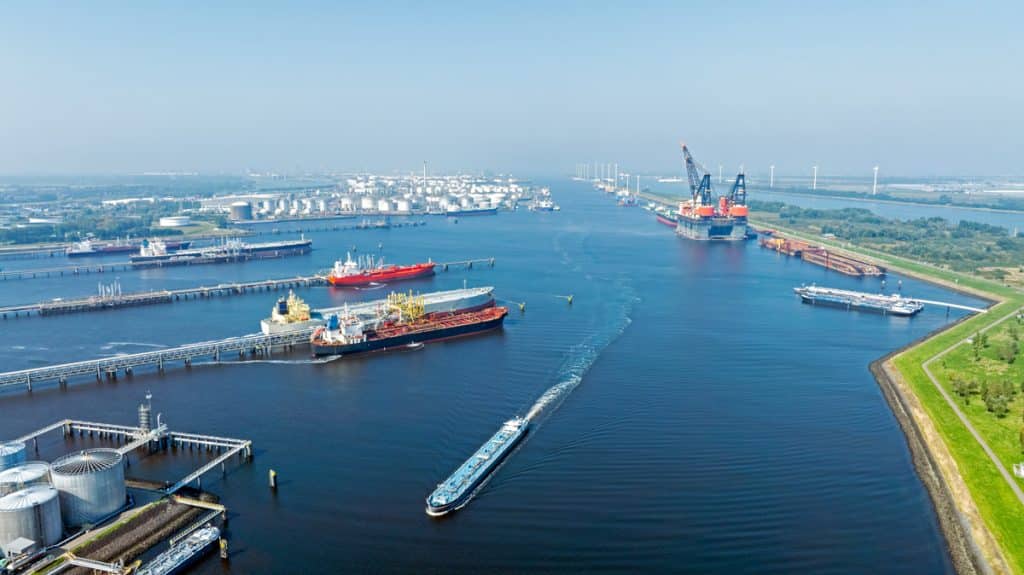
The Netherlands isn’t just a gateway to Europe—it is the gateway. In spite of its small geographic area, it carries a heavy weight of global trade because it sits directly at the mouth of Europe’s supply chain corridors.
First, there is the Port of Rotterdam. It is the undisputed #1 biggest seaport in Europe and consistently ranks in the top 10 busiest container ports in the world, handling 428 million tonnes of freight a year.* It’s the entry point for global ocean freight from Asia and the Americas.
Second, for high-velocity supply chains, Amsterdam Airport Schiphol ranks in the top 5 air cargo hubs in Europe, processing roughly 1.4 million tonnes of freight each year.*
Using a Dutch 3PL means your inventory lands in a country optimized entirely for moving freight between these global giants. The customs infrastructure here is incredibly sophisticated, offering unique financial advantages like fiscal deferral (meaning you don’t have to pay import VAT upfront when your goods land in Europe, protecting your cash flow).
* Source: Port of Rotterdam Authority, Annual Figures, Royal Schiphol Group Traffic and Transport Statistics
Where are strategic 3PL warehouses located in the Netherlands?
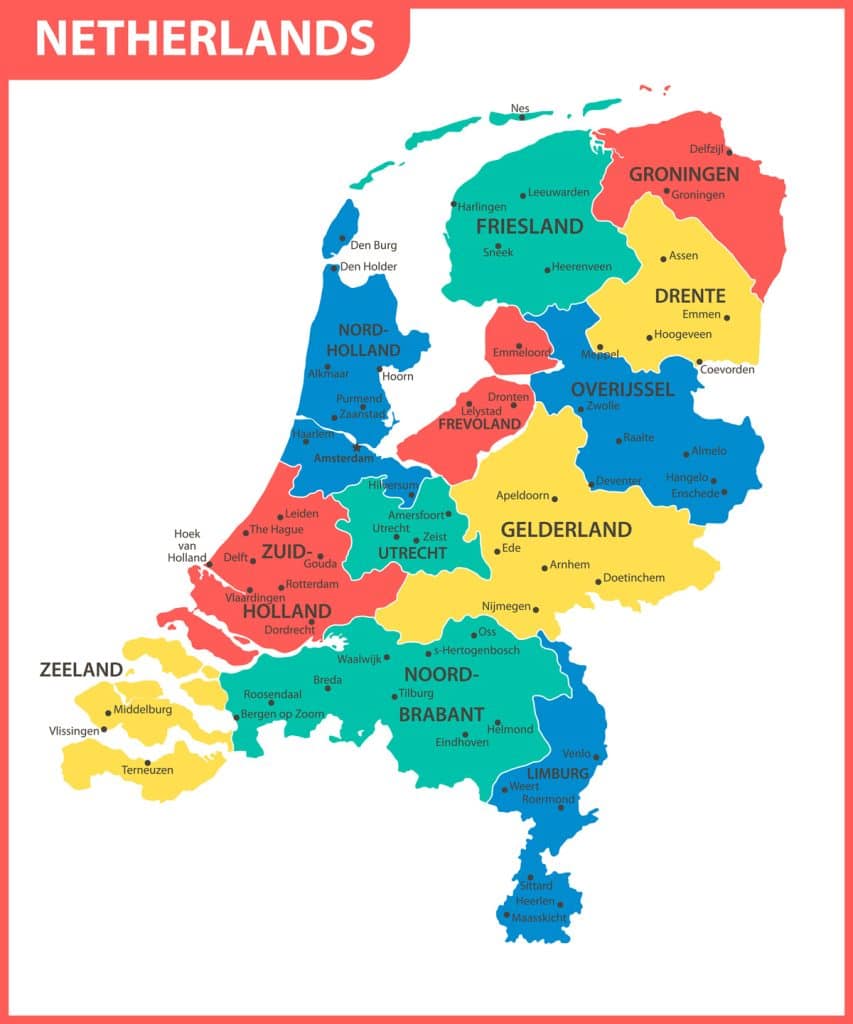
If you are looking for high-volume fulfillment, your eyes should be on the dominant province: Noord-Brabant in the southern Netherlands. This region is one of the top two spots in the country’s national “Logistics Hotspot” rankings.
It forms a logistics bridge, connecting the ocean gateways of Rotterdam and Antwerp to Germany and mainland Europe.
Within this region, two strategic hubs stand out:
1. Tilburg
Widely considered the #1 Logistics Hotspot in the Netherlands, Tilburg is built for scale. What sets it apart is its multi-modal connectivity across road, rail, and water. It features major inland barge and rail terminals that offer direct, traffic-free container shuttles straight from the Port of Rotterdam.
Sitting squarely on the corridor to Germany’s Ruhr region (its industrial heartland), Tilburg specializes in mega-fulfillment centers. It is the main choice for global brands in e-commerce, consumer electronics, and healthcare requiring 24/7 customs-bonded setups.
2. Etten-Leur
Holding the #2 Logistics Hotspot ranking, Etten-Leur acts as a nimble, high-efficiency counterpart to Tilburg. It is strategically positioned right between Europe’s two largest seaports: Rotterdam (Netherlands) and Antwerp (Belgium), making it perfect for brands pulling inventory from both maritime hubs.
Etten-Leur is optimized for advanced B2C and omnichannel fulfillment, relying on high-speed sorting and automation. With direct access to the A58 and A16 motorways, it serves as a launch pad for rapid-delivery road networks heading south into Belgium and France.
What should you be careful about when choosing a Netherlands 3PL?
While the Netherlands is arguably Europe’s most powerful logistics launchpad, choosing a Dutch 3PL is not as straightforward as finding a responsive provider with empty pallet space.
The country’s unique tax laws and highly specialized market mean a wrong choice can bleed cash flow or bottleneck your shipping times.
When vetting a 3PL in the Netherlands, you need to look past the polished sales pitch and watch out for these critical factors:
1. The “Article 23” Trap (Fiscal Representation)
If your company is based outside the EU, importing goods means you face a standard 21% Dutch import VAT on the value of your incoming freight.
- The Risk: Without the correct setup, you have to pay that 21% upfront at the port of entry and wait months for a tax refund, heavily penalizing your cash flow.
- What to check: Ensure your prospective 3PL can act as your General Fiscal Representative (GFR) and has the righ license. This allows them to postpone the VAT payment entirely, declaring and deducting it simultaneously on the same tax return.
2. Strict European Green & Packaging Compliance
Europe is incredibly strict regarding sustainability, and the Netherlands enforces these rules aggressively.
- The Risk: New regulations like the PPWR (Packaging and Packaging Waste Regulation) and CBAM (Carbon Border Adjustment Mechanism) place heavy legal responsibilities on the importer. If your 3PL uses non-compliant, non-recyclable packing materials for your outbound orders, or fails to properly track carbon data on inbound sea freight, you can face compliance fines.
- What to check: Ask potential partners how they track and report packaging waste data, and whether their facilities comply with the latest EU environmental directives.
3. Domestic vs. Pan-European Specialization
Because the Dutch domestic market is highly digitized and compact, many local fulfillment centers are heavily optimized only for the Netherlands, Belgium, and Germany (the Benelux region).
- The Risk: If your growth strategy involves pushing deep into Southern, Central, or Eastern Europe, a domestically focused Dutch 3PL will have high “last-mile” zone surcharges and longer transit times.
- What to check: Look at their carrier mix. Do they rely solely on local injection networks like PostNL or Bpost, or do they have deep, high-volume tier-1 integrations with pan-European networks like DPD, DHL, and Eurodis to handle cross-border linehauls seamlessly?
4. Hidden Surcharges and Re-pricing Thresholds
Dutch labor laws are highly protective, and warehouse space in hubs like Tilburg or Etten-Leur is valuable. 3PL’s often protect their margins by adding complex clauses to the fine print of quotes.
- The Risk: Many brands get caught off guard by heavy B2C peak season surcharges (often applied from October to December), manual handling fees for non-standard box sizes, or “minimum volume commitments.”
- What to check: Push for a completely transparent pricing matrix. Require them to clearly define their definition of an “exceptional handling fee” and detail exactly what happens to your rates if your actual volume lands 20% lower than your initial expansion forecasts.
Find a Netherlands 3PL warehouse
We can recommend a 3PL warehouse in the Netherlands that will be the right fit for your company, please contact us here for advice.